

Within the climate and scientific communities, there’s growing concern about how quickly the world is approaching (and may exceed) 2°C of warming. 2024 was the first calendar year in which global average temperature exceeded 1.5°C above preindustrial levels. The impacts of rapid warming are becoming harder to miss: The climate is changing quickly almost everywhere, local and global climate risks are growing, progress on mitigation has become more politically constrained and uncertain, and many of our systems and policies aren’t prepared for the conditions ahead.
Growing climate risk is increasing the demand for new technologies, tools, strategies, and ways of thinking about climate adaptation. Since publishing our Insights on Climate Adaptation in 2025 report, the practice of climate adaptation has continued to develop, as more people, communities, organizations, and institutions work to understand and respond to climate risks.
People use different language to describe climate adaptation (including climate resilience), but the work centers on helping people, communities, and organizations manage the risks of a changing climate. Those activities are expanding, and we can already see signs. For example, new funding and investment vehicles are emerging, such as Tailwind Futures, and adaptation is receiving more dedicated space at major climate convenings, including The Adaptation Forum, a co-hosted gathering of thought leaders in the adaptation space during Climate Week NYC 2025.
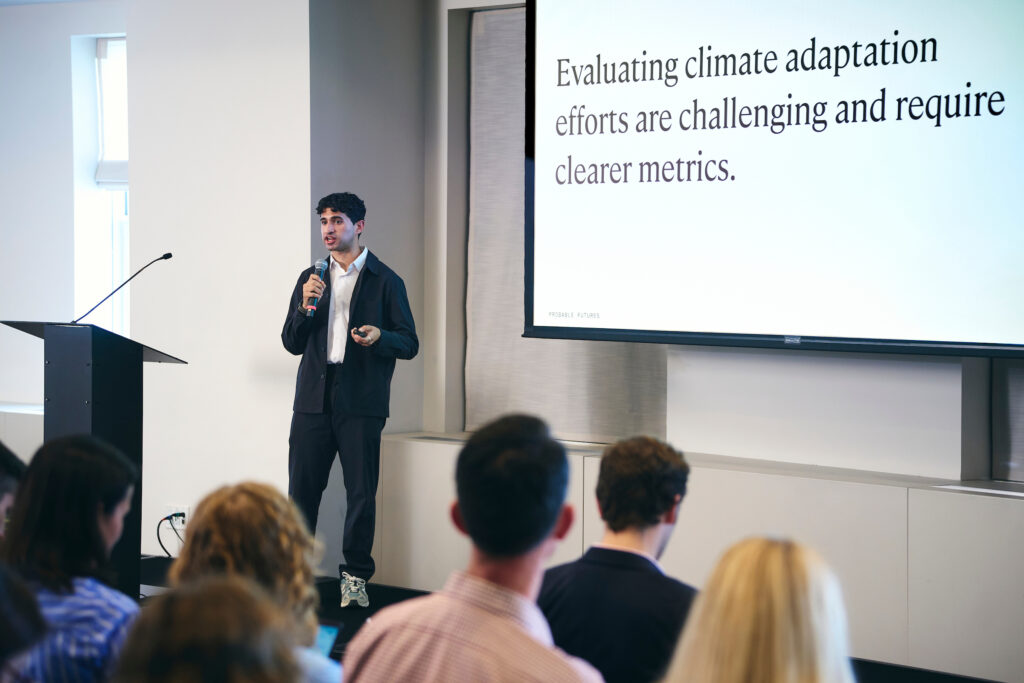
In my role as Director of Climate Adaptation Research at Probable Futures and through my PhD program at the University of California, Berkeley, I speak with experts, read emerging research, and study adaptation developments every day. Through these conversations and insights, I’ve reflected on which adaptation trends are likely to emerge and strengthen. Below are the trends advancing how we understand climate risks, how we respond to them, and where we focus adaptation action for 2026 and beyond.
1. Shifting from broad climate risk data to tailored, decision-ready data
Over the past several years, many climate data efforts have focused on making climate risk information more available at global and local scales and across climate hazards (such as heat, precipitation, wildfire, and flooding). Probable Futures created and launched its climate maps in part due to the lack of publicly available, highly vetted climate risk data.
Probable Futures map of Days above 32°C (90°F) moving through warming scenarios.
The growth in climate data variety and availability is valuable, but even the best data can only partially support many adaptation-related decisions—there’s still a meaningful gap between climate information and decision-ready insight.
For example, we can now see, through a variety of data tools and software platforms, where heat risk is rising or is high. But there are fewer tools that can help decision-makers and leaders choose what to do next, where to act first, or which intervention is most likely to matter. That kind of decision support often requires translating climate hazards into the second- and third-order risks people actually manage. Heat risk, for instance, may need to be translated into health risk, worker safety risk, energy demand, or business disruption, depending on who is making the decision.
Because of this complexity, I expect adaptation data to become more tailored to specific places, decisions, and users, helping people understand what climate risks mean for their homes, communities, institutions, and businesses.
People in the public sector are increasingly weighing adaptation efforts against priorities like affordability and cost of living, housing, public safety, and essential services. People in the private sector are increasingly weighing the cost and speed of adaptation against business timelines, growth priorities, and business needs.
One demonstration of more tailored and actionable climate data is the World Resources Institute’s Cool Cities Lab, launched in 2026. The platform uses hyperlocal data, maps, and metrics to help cities understand where heat exposure is greatest and where interventions like cool roofs and shade-giving trees could have the most impact.
I expect adaptation-related data to continue in this direction, helping people move from risk awareness to decision awareness, and ultimately, to adaptation choices.
2. Building more rigorous and practical ways to evaluate adaptation actions
Adaptation is more successful when we have a better understanding of what works and doesn’t work under what conditions. Evaluation processes provide insight into the impact of different adaptation efforts, including maladaptation—when a climate adaptation strategy or decision leads to unintended consequences or greater harm than good for society or ecosystems.
The obvious benefits of evaluation include enabling comparisons of cost, benefit, timing, tradeoffs, and feasibility of different adaptation strategies. Post-implementation assessments can tell us whether an adaptation intervention reduced risk, improved resilience, or created other benefits.
People and institutions are beginning to create more standard, formal ways of measuring progress, comparing efforts, and understanding impact. This work is showing up in new research methods, practical evaluation frameworks, and global processes, including the development of indicators for the Global Goal on Adaptation, established by the Paris Agreement in 2015. At COP30 in 2025, countries adopted the Belém Adaptation Indicators, which are intended to help track progress toward global adaptation targets. The indicators won’t answer every question about whether adaptation is working in a specific place or context, but they do point to a larger shift..
As adaptation moves further into policy, finance, infrastructure, and organizational planning, this need for evaluation will only grow. I expect greater efforts to develop rigorous and practical ways to evaluate, quantify, and compare adaptation actions and impacts.
3. Developing more specialized, hazard-specific technology
People and institutions are now beginning to address diverse climate hazards, each of which has its own characteristics. Heat, drought, extreme precipitation, storms, wildfire, and other hazards each have their own probabilities, work differently, move differently, and create different kinds of harm. Heat waves, for example, can unfold over days or weeks and cause slow, cumulative stress on people, infrastructure, and ecosystems. A storm, by contrast, can arrive in a matter of hours and cause rapid destruction.
Because each climate hazard works differently, managing the associated risks requires different technologies across monitoring, modeling, warning, response, and physical intervention. Preparing for wildfire may involve fire spread modeling, vegetation management, ignition detection, and smoke detection. Preparing for flooding may involve precipitation forecasts, river sensors, stormwater monitoring, and deployable flood barriers. Preparing for extreme heat may involve heat warning systems, cooling center planning, energy demand modeling, and urban cooling interventions.

In the aftermath of massive fires in recent years, state institutions, utility companies, and emergency responders across the western U.S. are using technology to detect wildfire smoke earlier and support faster response. For example, ALERTCalifornia, based at the University of California, San Diego, manages a disaster detection network of more than 1,200 cameras and sensors, while companies like Pano AI combine cameras, satellite data, and machine learning to help first responders detect fires earlier. These tools are not general climate adaptation tools. They are designed around the specific behavior of wildfire, like the speed at which fires can spread and the need to give responders more time before a small ignition becomes a larger blaze.
We will likely see more tools designed around the characteristics of different hazards, including wildfire detection and spread prevention, flood monitoring and warning systems, heat response tools, and drought planning systems. A key question is whether each of these tools will have a large enough market to support its development, maintenance, and use. Some hazard-specific tools may become strong businesses, but others may serve needs that are important for public safety or community well-being, yet not profitable enough to attract the private funding needed to build, maintain, and scale them. In those cases, public agencies or philanthropic organizations may need to help build, deploy, and maintain them.
4. Strengthening efforts to make grids more resilient to climate shocks and stressors
The energy grid is being transformed by growth in electrification, decarbonization, and decentralization (through the rise of more distributed and local energy resources like rooftop solar), while growing demand for energy (for example, from data centers) and volatility in fossil fuel prices and supply are also changing the system. Simultaneously, the grid faces risks from climate change impacts, such as substation damage from flooding and reduced transmission efficiency alongside increased electricity demand in extreme heat. The 2021 Texas power crisis showed how dangerous these vulnerabilities can become.
Grid resilience, including smart grid monitoring, distributed energy resources, microgrids, backup power and battery storage, undergrounding, vegetation management, and physical hardening, will become an increasingly important part of climate adaptation for our energy system. We can already see this shift in grid transformation and climate investment. For example, Sightline Climate’s 2025 Climate Tech Investment Trends report found a growing investment focus in technologies related to energy security, resilience, and the grid.
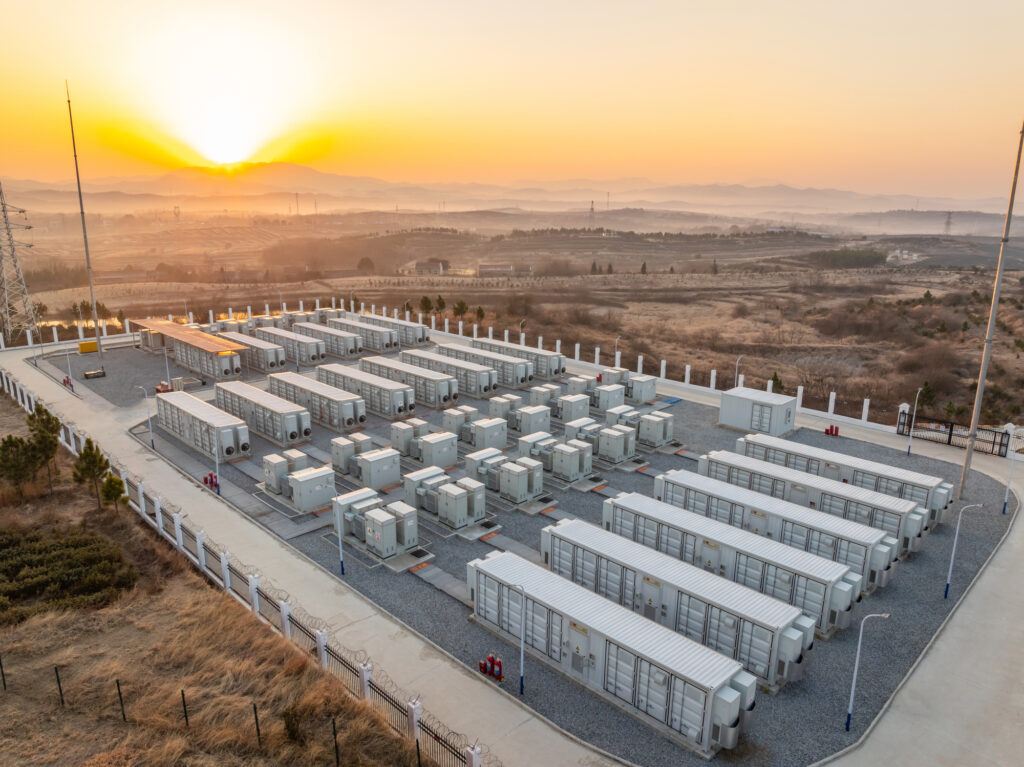
What was once a mostly one-directional, centralized energy delivery system is becoming a more distributed and multi-directional network, with more renewable energy, storage, distributed resources, and flexible demand. I think we’ll see grid resilience become central to adaptation, because these strategies will increasingly shape whether climate shocks lead to brief disruptions or prolonged outages for homes, businesses, and essential services.
5. Elevating insurance as a force in adaptation planning, policy, and behavior
Insurance is a valuable adaptation tool, as it can transfer risk, support recovery after climate shocks, and help signal where danger is increasing through premiums, deductibles, coverage limits, or insurer retreat. It can also shape incentives, because the way risk is priced can influence whether and how people and institutions reduce exposure, strengthen buildings, or avoid certain kinds of development.
As climate risks grow, damage to property and homes becomes more frequent and severe. Property owners are experiencing those shocks both physically (flooding, fire, wind damage, etc.) and financially as insurance markets adjust and recalibrate in response to changing probabilities and severities. Insurance markets have begun reflecting climate risk, and those changes are starting to influence where and how people build homes and infrastructure, where they invest in property, and where they choose to live.
A useful example of how insurance is beginning to influence adaptation efforts in the public sphere is Strengthen Alabama Homes, a program of the Alabama Department of Insurance. The program provides grants to help homeowners retrofit their homes and roofs to reduce wind damage from extreme winds and storms. Homeowners who participate can receive discounts on the wind portion of their homeowner’s insurance premium, which makes insurance not only a tool for recovery but also a tool for encouraging adaptation before exposure occurs.
Insurance pricing is one way climate risk is made visible, priced, and acted on through adaptation. I expect that insurance will increasingly influence adaptation planning, policy, and behavior, not only by helping people recover after climate shocks, but by shaping the choices people make before those shocks occur. The development of the insurance industry will therefore be an important factor in adaptation. If insurers become a source not only of risk pricing but also of risk information, adaptation guidance, and incentives to reduce risk, they could help more people act before losses occur. But that would require a meaningful shift in the role of insurance companies, from mainly pricing and transferring risk to also helping people reduce it.
6. Applying AI to a wider range of adaptation challenges
Effective adaptation to climate change often requires bringing together many kinds of information: climate science, local conditions, infrastructure realities, social vulnerability, operational constraints, and decision priorities. This is part of what makes adaptation difficult. The information needed to make good decisions is often complex, fragmented, and specific to a place or system.
Artificial intelligence (especially generative AI and large language models) may help with some of this complexity. AI can support tasks like monitoring, modeling and forecasting, pattern detection, and option comparison. In some cases, generative AI may also help translate technical climate information into more tailored guidance for specific users and decisions.
Companies, researchers, and practitioners have begun applying AI across many areas, including climate and weather prediction, infrastructure resilience, food and water management, energy management, crisis response, economic and social resilience, and ecosystem conservation. An example of one such technology is Google’s Flood Hub, which uses AI models to provide locally relevant flood data and flood forecasts so communities can monitor and take timely action. Growing interest in the application of AI to climate change and adaptation has also led to the emergence of organizations like Climate Change AI, a global nonprofit that brings together researchers and professionals working at the intersection of AI and climate change.
But AI depends on the existence of useful information. And there is very little information about adaptation in the public domain. It’s a new challenge, and examples of climate adaptation have not been compiled or organized well. As a result, AI doesn’t have a large library of resources to draw from about adaptation. This is another reason that documenting and sharing evaluations of adaptation will be so valuable.
AI use raises important questions about reliability, bias, accountability, and whether the guidance it provides is actually useful in a particular place or context. For AI to support adaptation responsibly, the people and institutions developing, using, and regulating this technology will need to reduce bias, make its reasoning and limits clear, and keep people accountable for the decisions it informs. At the same time, AI also introduces new risks and tradeoffs for adaptation. It carries climate and environmental implications of its own, including growing energy demand and water use tied to the infrastructure behind it.
It is safe to say that AI will become increasingly important in adaptation, both as a new source of questions and as a tool to help address adaptation challenges. But its value will depend not only on what the technology can do, but on how those in the adaptation field can apply and manage the technology in ways that help people make better decisions in a changing climate.
7. Expanding debate around the role of climate intervention
As warming continues, risks keep growing. We have more, clearer, worrisome signals that irreversible change, tipping points, and local climate changes so severe that adaptation is impractical if not impossible, are not far off. In response, people and institutions are starting new conversations about global-scale responses. One of those responses is climate intervention, sometimes called geoengineering.
Climate intervention generally refers to intentional efforts to alter Earth’s systems in order to counteract some of the effects of climate change. It can include approaches that remove carbon dioxide from the atmosphere, as well as approaches that reflect a portion of sunlight back into space, such as stratospheric aerosol injection.
If climate intervention is, at its core, an effort to manage the otherwise unmanageable risks of global climate change, then is it another tool for adapting to climate change, or is it something fundamentally different?
Its relationship to adaptation is uneasy, but important. If climate intervention is, at its core, an effort to manage the otherwise unmanageable risks of global climate change, then is it another tool for adapting to climate change, or is it something fundamentally different? There is no consensus, and there may never be, not least because global action will cause uneven responses locally. We don’t know much about the potential impacts of some climate interventions, how they could affect different regions unequally, or what long-term consequences they may have for Earth’s climate and natural systems.
There are good reasons to have informed conversations and do fundamental research on intervention. People with adaptation expertise can help explore, illuminate, and explain what climate intervention could mean for society and nature. There are also likely to be benefits for adaptation professionals to participate in these conversations and research projects. Even if climate intervention is never widely deployed, the debate itself may shape adaptation thinking, climate policy, research funding, public trust, and international governance.
Climate change requires people to consider risks and options, whether for mitigation, adaptation, or intervention. Treating strategies for managing the rate, pace, and impacts of climate change as distinct and separate is unlikely to lead to good outcomes. I am hopeful that there will be more collaboration across these new fields as society faces new challenges that have a common root cause. This may include more discussion about how these technologies should be governed, whether they should receive more investment, and whether climate intervention is a possible third leg alongside mitigation and adaptation.