Resilience generally describes how well we withstand challenges and recover afterwards. Recovery, in this sense, can be physical (health and safety), financial (costs and income), social (support networks and services), and emotional (stress and wellbeing). For example, a resilient immune system can help you prevent severe illness and physically recover faster if you do get sick.
When climate hazards happen, the more climate resilient we are, the less damage occurs, the better we can cope, and the faster we can recover. Climate resilience can help us live more comfortably with climate change and improve our climate adaptation approaches.
What is climate resilience?
Climate resilience describes how well we prepare before, respond during, and recover after a climate hazard occurs. People, households, businesses, infrastructure, ecosystems, and entire communities can all be climate resilient. We can assess and improve our climate resilience by managing climate risks through climate adaptation.
Climate resilience is a capability we strengthen over time as climate risks evolve and as we learn what approaches work to manage those risks. It can be influenced by factors such as redundancies in place (backups when something fails), available resources (people, money, information, equipment), and the speed at which we restore essential functions after a climate hazard occurs, all of which influence whether we experience lasting harm or short-term disruption from climate change. To build our climate resilience, we will likely have to cooperate across the public and private sectors to prioritize these efforts.
How do you build climate resilience?
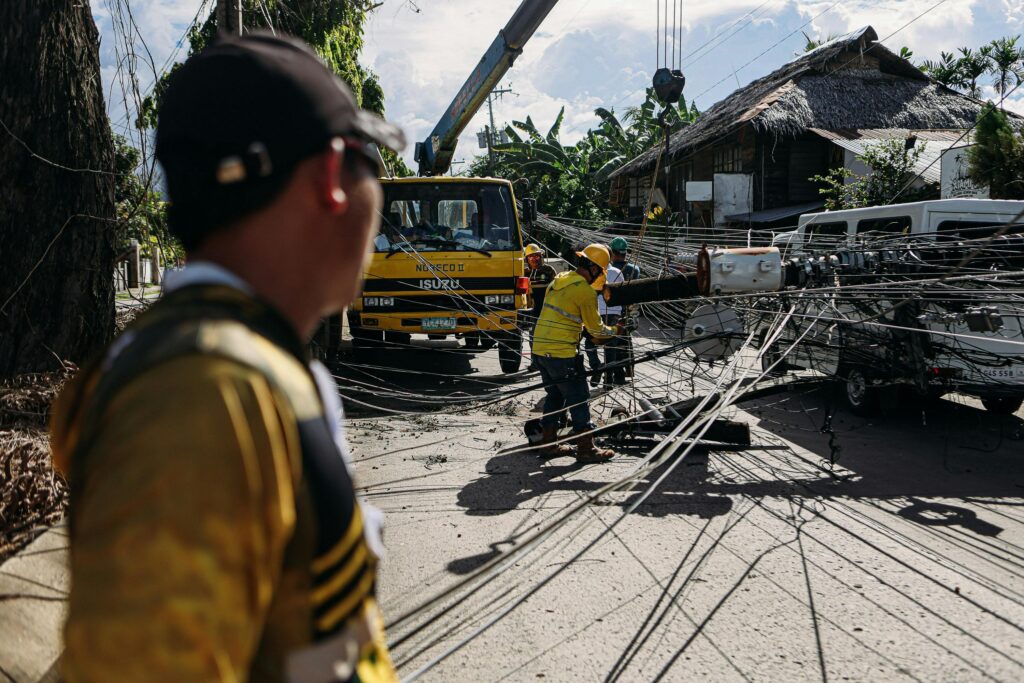
Climate adaptation is a toolkit of strategies and approaches for managing those risks and helps build resilience. There are many ways to build climate resilience through climate adaptation:
- An individual can build habits that enhance heat resilience by supporting cardiovascular and respiratory health, staying hydrated, and following care plans for chronic conditions.
- A business can improve water efficiency so it can keep operating during drought or a period of water use constraints.
- A city can upgrade the electric grid and add backup power for hospitals and cooling centers so essential services stay online when heat waves strain demand.
- A country’s government can purchase a catastrophe bond so that after a hurricane, financial resources arrive quickly and recovery can begin sooner.
Consider a community facing high flood risk from extreme rainfall and storm events. That community can build climate resilience by strengthening its ability to manage that flood risk before water rises and to respond and recover when flooding occurs. To do so, they can use climate adaptation strategies like upgraded stormwater systems and early-warning, evacuation, and response plans. Together, these climate adaptation strategies improve resilience by reducing disruption to homes and essential services and supporting faster recovery after a flood.
Climate resilience vs climate adaptation
You may have heard climate resilience and climate adaptation used hand-in-hand or interchangeably, but they are not the same thing. Climate adaptation is the continuous process of making our systems better able to withstand climate challenges and climate resilience is the result. We can use climate adaptation to manage climate risks, and how well we manage climate risks determines how climate resilient we are.
But climate adaptation is not the only way we build resilience. Sometimes taking actions for other reasons, like improving health, affordability, or quality of life can also strengthen climate resilience. For example, improving your cardiovascular health for health reasons or upgrading home insulation to reduce energy-related cooling costs can make you more resilient to climate hazards like extreme heat.
Why is climate resilience important?
Climate resilience is a quality that can help us live well in a changing climate and a useful indicator of how well or poorly climate adaptation approaches are working. An important part of building climate resilience is knowing our current resilience level. If a climate hazard struck today, how well could we endure and bounce back? If we have done the work to manage climate risks through climate adaptation, we can probably get back to normal quite quickly. If not, it might take longer to rebuild and recover.
For instance, climate resilience can be the difference between returning home quickly after a flood because the house was sufficiently flood-proofed, or spending months navigating repairs, temporary housing, and financial strain. That is why it helps to look at the aspects of your life that are vulnerable, whether they are physical safety, finances, social support, or access to essential services, and strengthen them before a hazard hits.
Successful climate resilience does not mean a return to “normal,” especially when the baseline itself is shifting due to climate change. By becoming resilient, we are becoming more comfortable in a “new normal,” where climate conditions are hotter, drier, wetter, more extreme, or more volatile than what we were used to.