A heat wave is a stretch of unusually hot weather, relative to the historical norm for that region and season, lasting at least two to three days. Because every place has its own historical climate patterns, what qualifies as a heat wave varies from one location to another.
In a changing climate, heat waves persist longer, occur more frequently, and are more intense—raising climate risk and increasing the need for climate adaptation strategies. In March 2026, the Southwestern U.S. experienced an unprecedented heat wave, with temperatures reaching 20 to 40°F above average and breaking daily temperature records in more than 150 localities.
When heat exceeds levels that communities are prepared to withstand, it affects everything from human health to work rhythms to infrastructure. Understanding how the incidence and intensity of heat waves are changing helps us reduce both our vulnerability and exposure.
How do heat waves form?
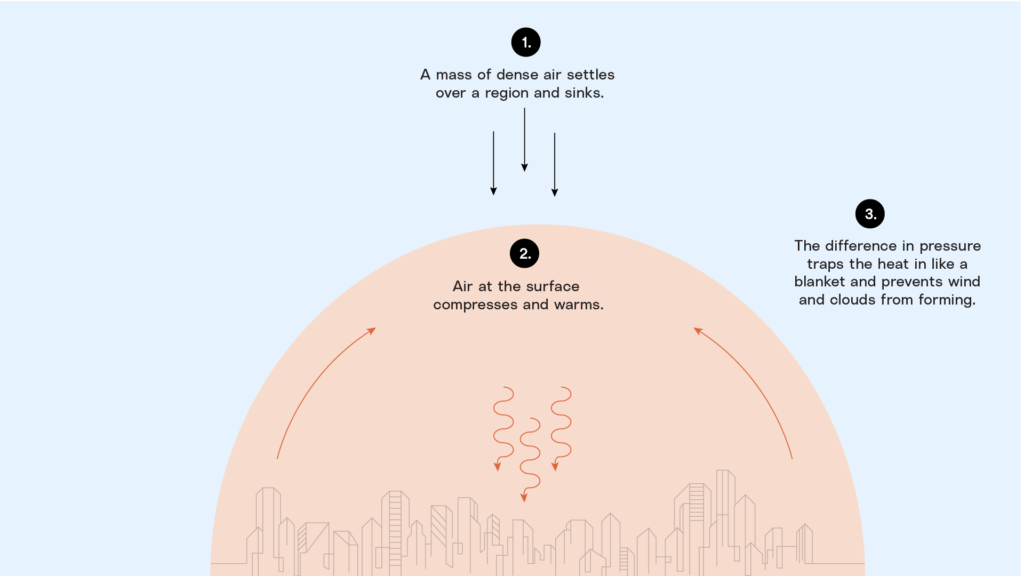
Heat waves form when air is compressed and trapped in one place for several days or longer, becoming hotter and hotter while it sits. This usually occurs underneath a high-pressure system.
High-pressure systems form when a mass of air is transported by atmospheric circulation patterns and settles over an area, sinking and increasing pressure as it descends. If a high-pressure system stays in place over multiple days, the effects of trapped air compound.
Clouds, wind, and rain are less likely to form, leaving the skies clear, the air stagnant, and the sun’s heat unobstructed. As more sunlight reaches the surface, the heat builds. These conditions can sustain unusually high temperatures for days or weeks, when heat would otherwise dissipate.
Heat waves can technically happen at any time of year, since they’re defined by temperatures that are unusually high for that region and season, but they’re most common in the summer. In the Northern Hemisphere, summer weather moves more slowly because the jet stream, a fast-moving, high-altitude air current that normally steers high-pressure systems, storms, and weather systems, weakens and shifts north, making it easier for a high-pressure system to settle in and stay put.
Heat domes
A heat dome is a strong, persistent high-pressure system creating an exceptionally severe heat wave. Heat domes occur when a high-pressure system traps air very effectively, like a lid sealed over a region. The stronger and more efficient the heat dome, the more intense the resulting heat wave will feel.
Urban heat island effect
The way we use land, especially in urban settings, can make heat waves worse by trapping heat rather than dissipating it, called the urban heat island effect. Urban development often replaces natural surfaces, such as soil, trees, and vegetation, with concrete, asphalt, and buildings that absorb heat during the day and release it slowly at night. With fewer plants and less shade, these areas stay hotter for longer and don’t cool down as easily.
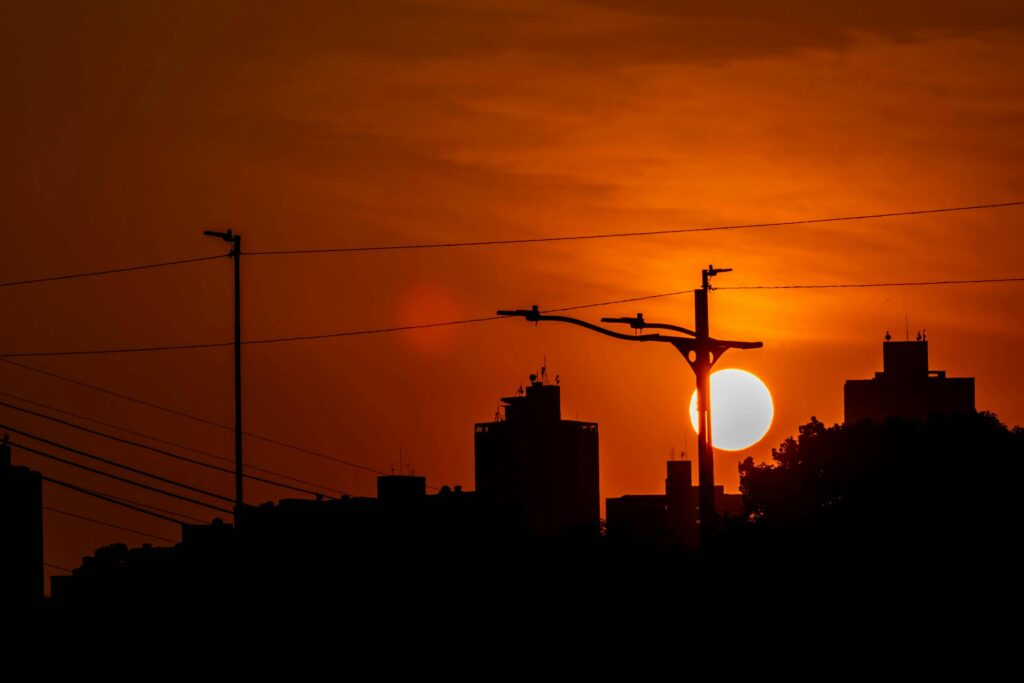
As a result, when a heat wave settles in, urban areas can experience even higher temperatures and more dangerous conditions than surrounding regions. According to a 2023 study of heat waves and urban heat islands in the western U.S. during the summer of 2021, heat waves have stronger effects in inland cities, causing the average temperature to increase by ~ 4 °C and ~ 10 °C for daytime and nighttime, respectively.
In July 2019, most of Western Europe experienced an extreme, widespread heat wave. During this event, Paris reached 42.6°C (108.7°F), breaking the historical record set in July 1947. A recent study describes how, during the heat wave, concrete, roofs, and asphalt absorbed heat during the day and released it at night. This led to a nighttime temperature increase of approximately 2.7°C. Throughout the summer of 2019, during which multiple heat waves occurred, around 1,500 people died in France.
Heat waves in a changing climate
Heat waves are not a new phenomenon, but climate change is making them last longer, occur more frequently, and intensify for three main reasons. First, temperature levels that used to be unusual are becoming more common, so heat waves now reach higher temperatures. The map below shows the 10 hottest days in a year in a historical climate and in a 2°C near-future climate, demonstrating that temperatures are reaching new highs at northern latitudes across the globe.
Second, climate change is disrupting the regular patterns that once moved air around the planet. High-pressure systems that linger in one place are becoming more common and longer-lasting.
Third, because of the Clausius-Clapeyron relationship, warmer air can hold about 7% more water vapor for every 1°C of warming, so humidity is increasing, compounding the risks of heat waves and wet-bulb temperatures. Studies have shown that a wet-bulb temperature of 35°C marks the upper limit that the human body can withstand and can prove fatal.
In the spring of 2022, an extreme heat wave swept across India, Pakistan, and other parts of Asia. During the event, the maximum wet-bulb temperatures in parts of southeastern India and southeast Asia approached and, in some cases, crossed the 35°C survivability threshold, exposing more than a billion people to fatally high temperatures.
Risks associated with heat waves
During a heat wave, the effects of extreme heat amplify and compound. Heat waves pose serious risks to human health, the natural environment, and our built environment and infrastructure. Extreme heat for prolonged periods without reprieve can have cumulative effects, straining the human body, especially for older adults, children, outdoor workers, and people without access to cooling. Continued exposure to extreme heat also stresses plants and wildlife, dries out soils, damages crops, disrupts ecosystems, and degrades our built environment.
Health risks
When nighttime temperatures don’t cool enough to give the human body a break, and high wet-bulb temperatures persist, the body is less able to cool itself or recover.
Humans can acclimate to living in places that regularly experience extreme heat and high humidity if their bodies can recover. During a heat wave, that recovery window disappears, and each consecutive hot day compounds the strain, making conditions far more dangerous over time.
Heat stress is one of the first heat-related conditions people develop when exposed to high temperatures, which can progress to heat exhaustion and heat stroke. Heat stress, according to the World Health Organization, is the leading cause of weather-related deaths. Heat stress and heat exhaustion can worsen underlying health issues. The most severe condition, heat stroke, occurs when the body can no longer regulate its temperature, such as when it’s too hot and humid for the body to sweat and cool itself.
Damage to the natural environment
Heat waves can damage the natural environment by affecting plants, land animals, and aquatic life, all of which are adapted to live within a stable range of climate conditions rather than today’s shifting extremes.
In 2021, a heat dome in the Pacific Northwest showed how severe these impacts can be: The drying effect of the heat wave contributed to extreme wildfires across the region, the intense heat triggered extensive glacial melt and created hazardous conditions for land-based wildlife, and the warming of rocky intertidal shores drove mass die-offs of marine species. It also damaged many crops: Fruit baked in the trees, pest management became a challenge, water supplies were limited, and in some cases, crop fires broke out.
The prolonged heat from a heat wave can also worsen droughts by drying out soil, lowering river flows, shrinking lakes and reservoirs, and straining groundwater reserves, making it harder for farms, businesses, and homes to get water. During heat waves, harmful algae blooms can worsen, making drinking water unsafe and putting both people and wildlife at risk. As the climate warms and heat waves become more frequent, these blooms are becoming more common in the Great Lakes, which hold 20% of the world’s freshwater.
Damage to the built environment and infrastructure
Just as plants, animals, and ecosystems are adapted to past climate conditions, much of our built environment is designed to withstand only a limited number of very hot days. As heat waves become more frequent and intense, many parts of our infrastructure, such as roads, bridges, train tracks, and energy systems, will rapidly degrade under compounding strain from exposure to heat over multiple days or weeks.
During a heat wave, cumulative damage builds as materials absorb heat without cooling off. Solar panels and data centers struggle to stay cool enough to operate efficiently. Roads and bridges can soften or crack, streetcar power cables can sag, and train tracks warp. High temperatures can also reduce aircraft engine performance, degrade power lines, and cause equipment failures across energy and transportation systems. Beyond these direct impacts, the prolonged nature of heat waves places significant compounding strain on the electrical grid as millions of people simultaneously rely on air conditioning, increasing the likelihood of power failures and cascading infrastructure problems.
Adapting to heat waves
Climate adaptation strategies can help us manage the risks of heat waves and ultimately become more climate resilient. These strategies exist on a spectrum, from simple steps individuals can take in their homes, workplaces, or businesses to larger efforts undertaken by communities, local governments, and organizations.
Reducing vulnerability to heat waves
The less prepared we are for a heat wave, the more vulnerable we are. Strategies for reducing our vulnerability include engineered and nature-based approaches, as well as behavioral changes.
Engineered approaches
Engineered strategies include expanding access to air conditioning, designing streets and buildings to improve airflow and prevent heat buildup, and making buildings and cooling systems more energy-efficient so they can handle higher demand without straining equipment, consuming huge amounts of energy, or increasing emissions.
Nature-based approaches
Communities can use nature-based approaches such as planting more trees, creating parks and shaded corridors, and incorporating green roofs and blue spaces to lower temperatures and reduce urban heat island effects.
Behavioral approaches
People can reduce their vulnerability to heat waves by changing their behavior. For example, you might wear light, breathable clothing, maintain physical fitness to better withstand high temperatures, and check on neighbors to make sure they have ways to stay cool and hydrated, thereby protecting yourself and others from heatstroke.
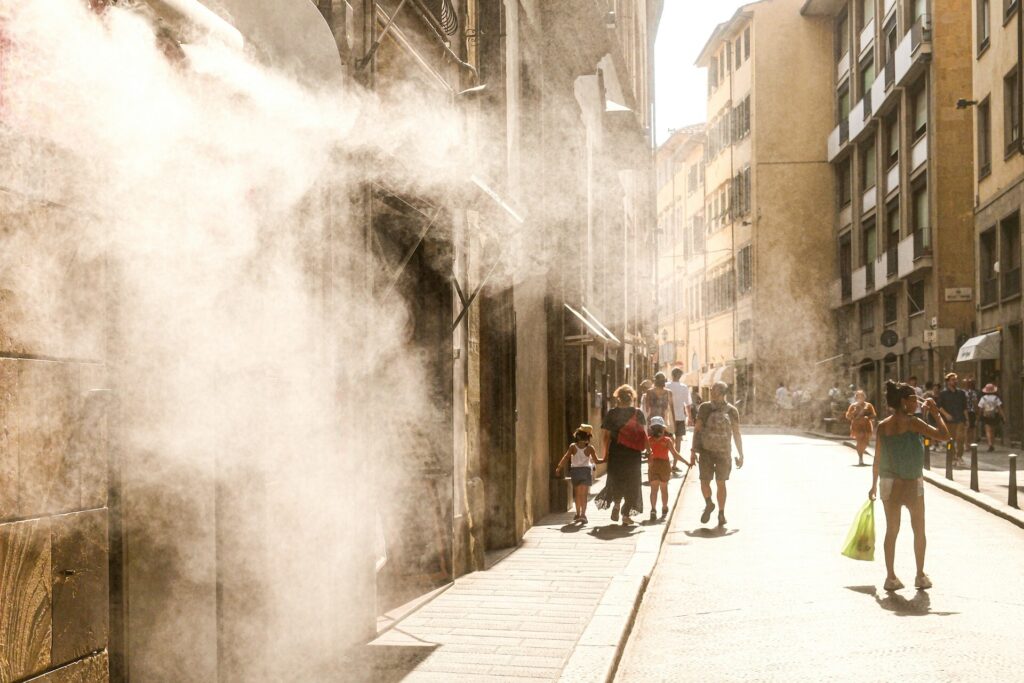
Community-level measures, organized by companies, governments, or organizations, begin with forecasting and early warning systems. While a heat wave occurs, encouraging certain behaviors, such as mandating rest and hydration breaks, creating public education and emergency response campaigns on heat safety, and opening cooling centers, can protect employees, citizens, and communities.
Reducing exposure to heat waves
Exposure is how often, how long, and how directly we are in harm’s way. Reducing exposure limits damage. You can reduce exposure by leaving a risky area before a heat wave (relocation) or by adjusting your activities to make them safer (behavioral adjustment).
Relocation approaches
Emergency or temporary relocation is used during heat waves to reduce immediate health risks, especially for the most vulnerable. Because heat waves are episodic, intense periods of dangerous heat, most relocations are not permanent; instead, people may temporarily move to cooling centers, emergency shelters, or the homes of family and friends outside of affected zones if they have the means. In sectors such as tourism, construction, and maintenance, employers sometimes shift activities to cooler months or times of day in order to avoid peak heat altogether. In agricultural regions, farmers may relocate livestock or adjust operations to reduce heat stress.
In more severe situations, such as when heat waves coincide with power outages, wildfires, or other compounding hazards, local governments or organizations may organize short-term evacuations or transfers of essential services to keep people safe. For example, in 2022, when Santa Clara Valley Medical Center in California lost power at the height of a heat wave, patients had to be transferred to other facilities. These measures can be built into municipal or organizational heat-response plans and serve as rapid, life-saving interventions when temperatures spike beyond what local infrastructure or households can safely withstand.
Behavioral approaches
During heat waves, communities and organizations often shift the timing of events, such as moving concerts, community events, or festivals to after sunset when temperatures drop. Employers may adjust work schedules so that construction crews, road maintenance teams, or agricultural laborers work at night or dawn rather than during peak heat.
People also adapt to inescapable heat, sometimes without consciously doing so, by scheduling their errands for cooler times, choosing shaded routes, or limiting time spent outdoors altogether. These changes don’t eliminate heat, but they reduce how often, for how long, and how directly people are exposed during the most dangerous periods of a heat wave.
Even large organizations adjust their behavior during extreme heat; for example, during a 2026 heat wave in the southwestern United States, several Major League Baseball spring training games’ start times were shifted from afternoon to evening to keep both players and fans out of triple-digit temperatures.
Was this article helpful?
Thank you. Your feedback helps us improve.