Feedback loops can either amplify or counteract their own effects, depending on whether they are positive or negative. For example, you may have heard the screeching of an audio feedback loop when a speaker and microphone amplify their own sound. A thermostat regulates itself in a negative feedback loop, adjusting in response to temperature to reach a stasis.
Feedback loops occur in Earth’s systems as well and can affect climate stability. Because of human greenhouse gas emissions, positive feedback loops are now adding extra heat to the climate system, accelerating global warming. As global average temperature continues to increase, these feedback loops will become more powerful forces in climate change.
What are climate feedback loops?
Climate feedback loops are mechanisms in Earth’s climate that either amplify or counteract their own effects, sometimes adding to global warming.
Negative climate feedback loops counteract warming, stabilizing the climate system. For example, plants may grow faster in response to moderate amounts of excess carbon dioxide in the air, absorbing some CO2 and bringing concentrations closer to previous levels.
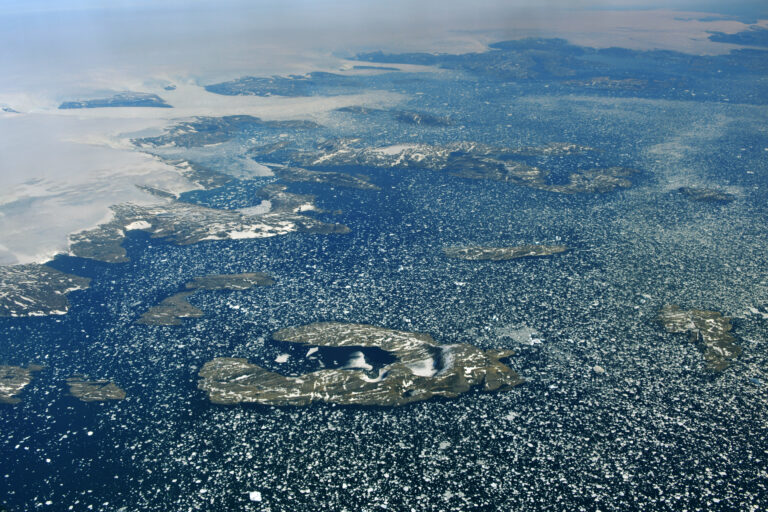
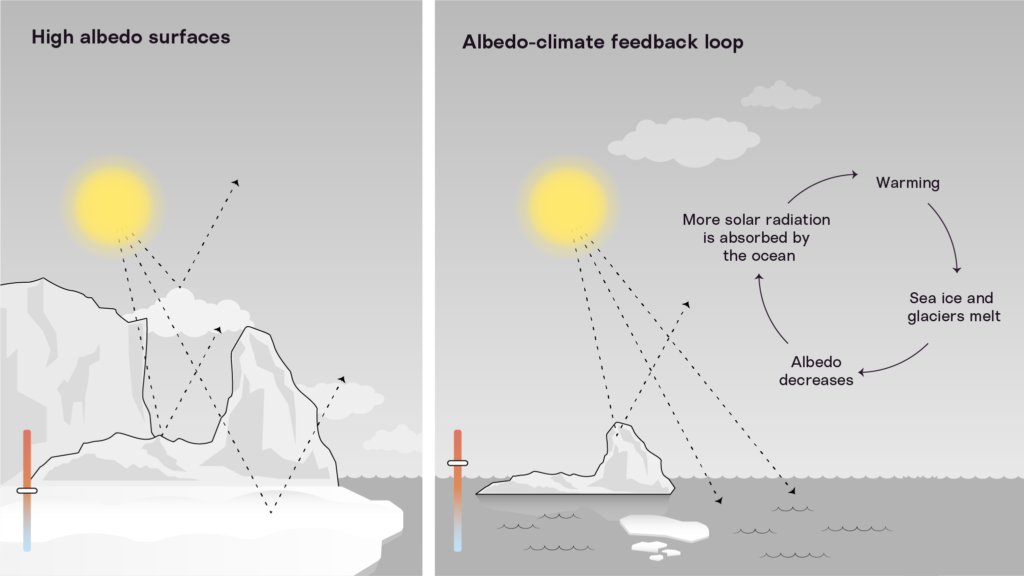
Positive feedback loops amplify and accelerate warming, making the climate system less stable. For example, warmer global temperatures cause snow and ice to melt, decreasing Earth’s reflectivity, called albedo. Decreased reflectivity means that Earth absorbs more solar radiation, thereby increasing warming and generating further ice melt in a looped cycle.
How do positive climate feedback loops affect warming?
Greenhouse gas-induced global warming has initiated positive climate feedback loops across Earth’s systems, which are already amplifying and accelerating climate change and could grow stronger over time. These positive climate feedback loops are now stronger than any negative loops, meaning the climate is warming faster than it would from human greenhouse gas emissions alone.
Positive climate feedback loops accelerate global warming either by emitting heat-trapping greenhouse gases (such as from forest fires) or directly raising Earth’s temperature (such as through albedo). These warming forces strengthen the feedback loops, making their warming effects more powerful. For example, every wildfire makes future wildfires more likely by adding greenhouse gases to the atmosphere.
Until recently, climate change has occurred relatively gradually, with humans as the sole source of warming via greenhouse gas emissions. Now, positive feedback loops are adding to that warming, as shown by the acceleration in Earth’s energy imbalance, a measure of the exchange of energy between Earth and space that identifies excess heat trapped in the climate.
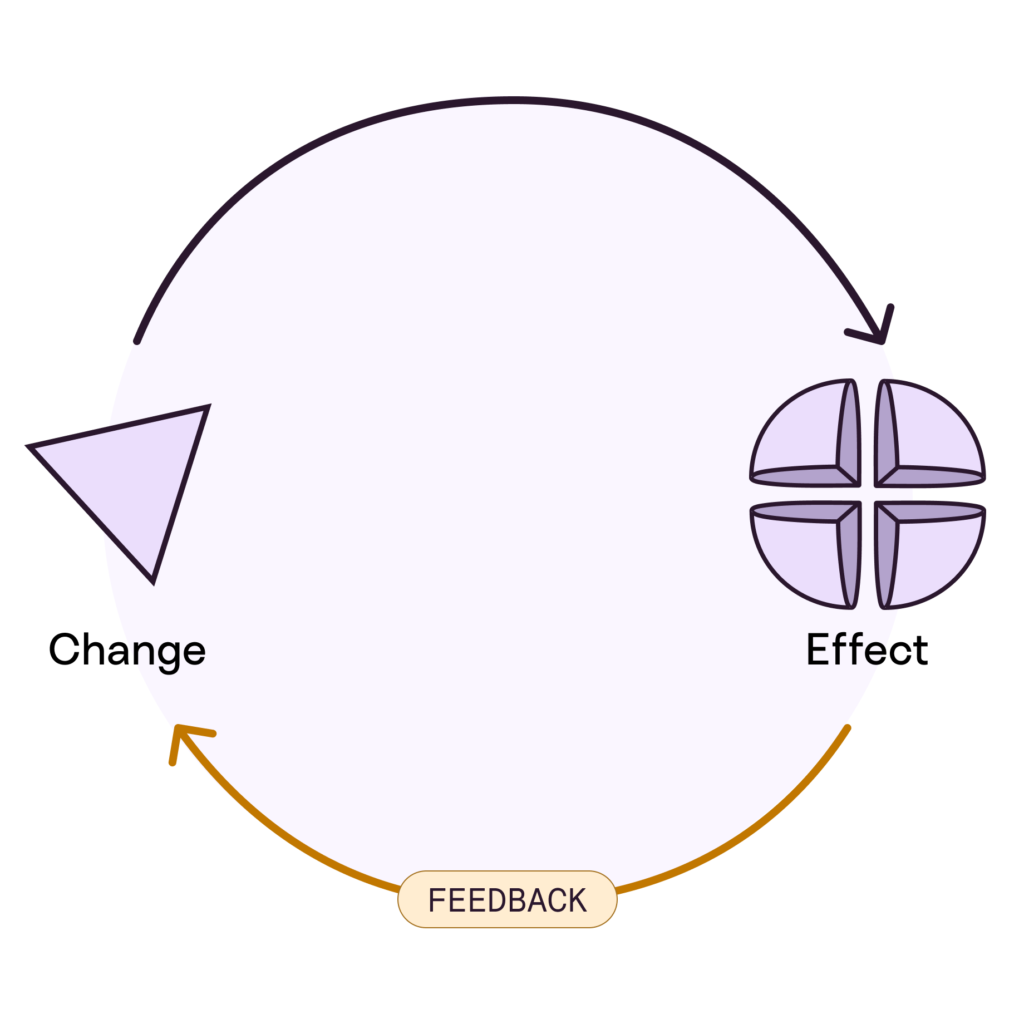
It’s important to understand the distinction between feedback loops and general warming. Not all changes that create warming are positive climate feedback loops. For example, although clearing a forest to build a parking lot may lead to warming, that warming does not in turn create more parking lots. Feedback loops only exist when the change that starts the loop is the same as the effect generated.
Powerful positive climate feedback loops
Currently, a number of positive climate feedback loops are contributing to warming and likely to grow stronger in coming decades.
Albedo loss
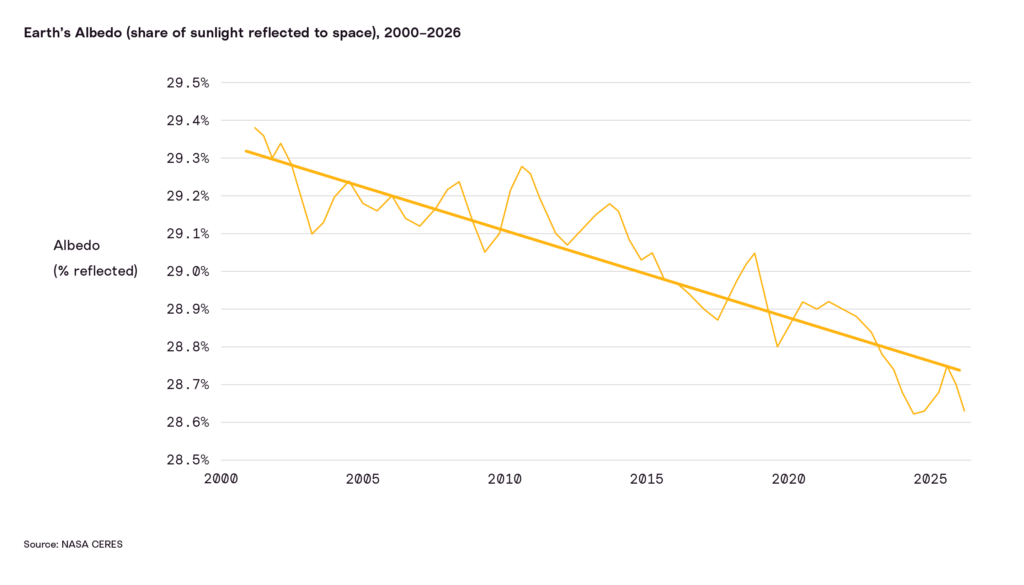
Albedo is a measure of how much of the sunlight hitting a surface on Earth, such as ice, water, forests, clouds, or city pavement, is reflected back into space. As temperature rises, reflective surfaces with high albedo melt, and Earth absorbs more heat in a feedback loop. NASA measurements since 2000 indicate a consistent downward trend in albedo, and it’s been estimated that albedo loss accounted for 0.2°C of warming in recent years in addition to warming from human greenhouse gas emissions.
Permafrost thaw
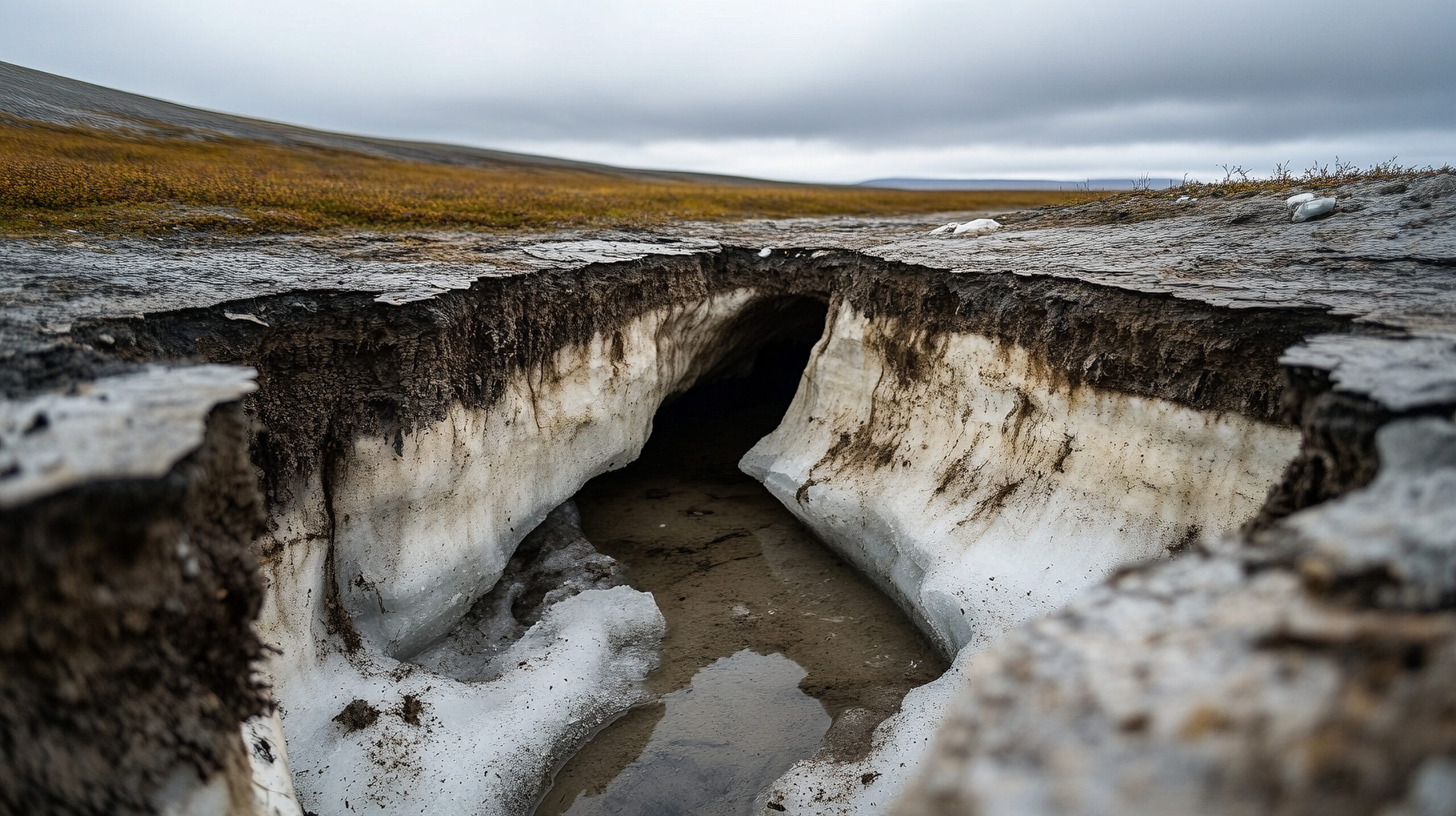
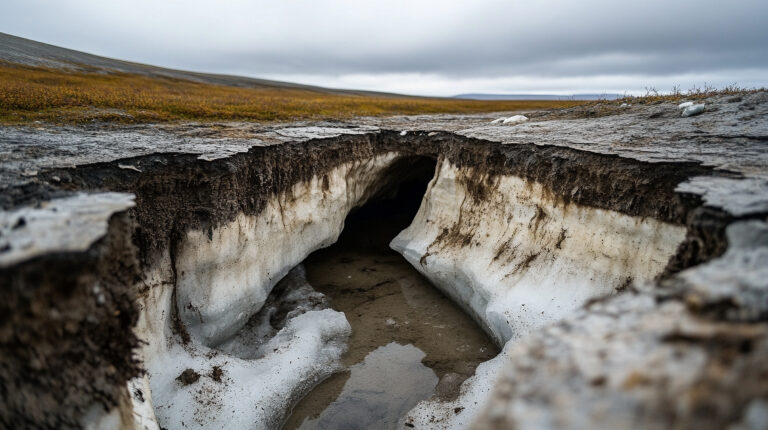
Permafrost thaw is the gradual warming of frozen ground in cold regions, like the Arctic. Most of the permafrost on Earth today has been frozen since the last ice age, around 12 thousand years ago. Throughout that time, global permafrost has stored large amounts of frozen plants and animals. Because this organic matter cannot decay while frozen, permafrost holds about twice as much carbon as the atmosphere contains.
As global average temperature rises, permafrost is thawing, releasing greenhouse gases like carbon dioxide and methane, further warming the atmosphere in a feedback loop. The Arctic is warming three times faster than the rest of the planet, on average, accelerating permafrost thaw further. Estimates range on how much carbon permafrost thaw will release in the near future, but one paper found that permafrost could cross a tipping point and shift from being a net store of carbon to a net source of carbon around the 2050s.
Wildfire increase
Wildfires are intensifying globally as a result of climate change, creating a feedback loop. As global average temperature rises, heat and drought become more frequent and severe, drying out plants and forests and making them more flammable. Once lightning or human activity ignites a wildfire, this dry fuel burns more easily, resulting in larger and longer-lasting fires that can release large quantities of greenhouse gases and prevent plants from absorbing carbon in the near future.
Australia’s 2020 wildfires, for example, released more carbon dioxide than the combined annual emissions of 116 of the least-polluting countries on Earth. This greenhouse gas release in turn leads to further warming, reinforcing wildfire conditions.
In the Amazon rainforest, an ecosystem that plays a key role in regulating global temperatures, the wildfire climate feedback loop may have global consequences. If wildfire continues to become more frequent in the Amazon, eventually the weakened ecosystem may be unable to recover, crossing a tipping point to become a carbon source rather than a carbon store.
Water vapor and cloud change
Climate change alters the amount of water vapor in the atmosphere and the type of clouds forming in ways that increase how much heat the planet retains. A warming atmosphere holds more water vapor, which acts as a greenhouse gas and traps additional heat.
At the same time, warmer land and ocean temperatures reduce the low cloud cover that blocks sunlight and raise high cloud cover that traps heat. This additional heat further warms Earth, reinforcing the same changes in water vapor and cloud cover.
What is the future of positive feedback loops?
As warming progresses, positive climate feedback loops will get stronger and stronger until, potentially, they are the dominant force behind warming, even if we curb or stop human greenhouse gas emissions.
Climate feedback loops are already accelerating warming, making it harder for us to control the planet’s warming trajectory. A 2023 paper states that even “modest warming” increases the risk of amplifying feedback loops and that, in the short term, delaying emissions reductions could intensify future climate impacts, while in the long term, feedback loops could grow strong enough to shift the entire climate away from human habitability. A 2026 paper suggests that positive feedback loops could add to warming by 20-30% by the end of this century.
In a possible future Hothouse Earth scenario, feedback loops eventually push the global climate over a threshold into continued, self-perpetuating warming, independent of greenhouse gas emissions from human activity. The sooner humans slow and stop greenhouse gas emissions, the less powerful these feedback loops will be.
Was this article helpful?
Thank you. Your feedback helps us improve.