Heat is one of the most widespread and ubiquitous climate risks, with extreme or prolonged high temperatures likely to affect almost everywhere on Earth. Many people in cities around the world are unprepared to face dangerous combinations of heat and humidity; yet, communicating the gravity of present and future heat risk remains difficult.
Climate projections are often presented as technical data, making it hard for decision-makers and the public to understand what a warmer future could actually mean for the places they know. The United Nations Environment Programme (UNEP) began developing its Beat the Heat 50@50 global activation to make heat risk more vivid, actionable, and understandable.
Rather than telling people that temperatures are rising, the activation set out to help cities visualize what the future could look like, understand local vulnerabilities, and learn from successful adaptive strategies already being implemented around the world. The campaign brings together cities to strengthen heat preparedness, stress-test systems, share successful examples of climate adaptation, and accelerate action to both protect communities and reduce the greenhouse gases driving climate change.
The UNEP team reached out to Probable Futures to collaborate on representing the scale and intensity of rising heat in cities worldwide using custom digital climate risk maps as part of the global activation’s interactive webpage.
Designing custom climate risk maps
The UNEP team and the Probable Futures product team explored the question “How do you make heat feel real?” The result was an interactive experience that combines climate projections with stories from cities already adapting to rising temperatures.
In collaboration with the UNEP team, the Probable Futures product team began developing a 50°C (122°F) global heat-threshold map that would serve as the centerpiece of the activation and live in two places: as a new addition to the Probable Futures climate maps and integrated into the 50@50 interactive webpage.
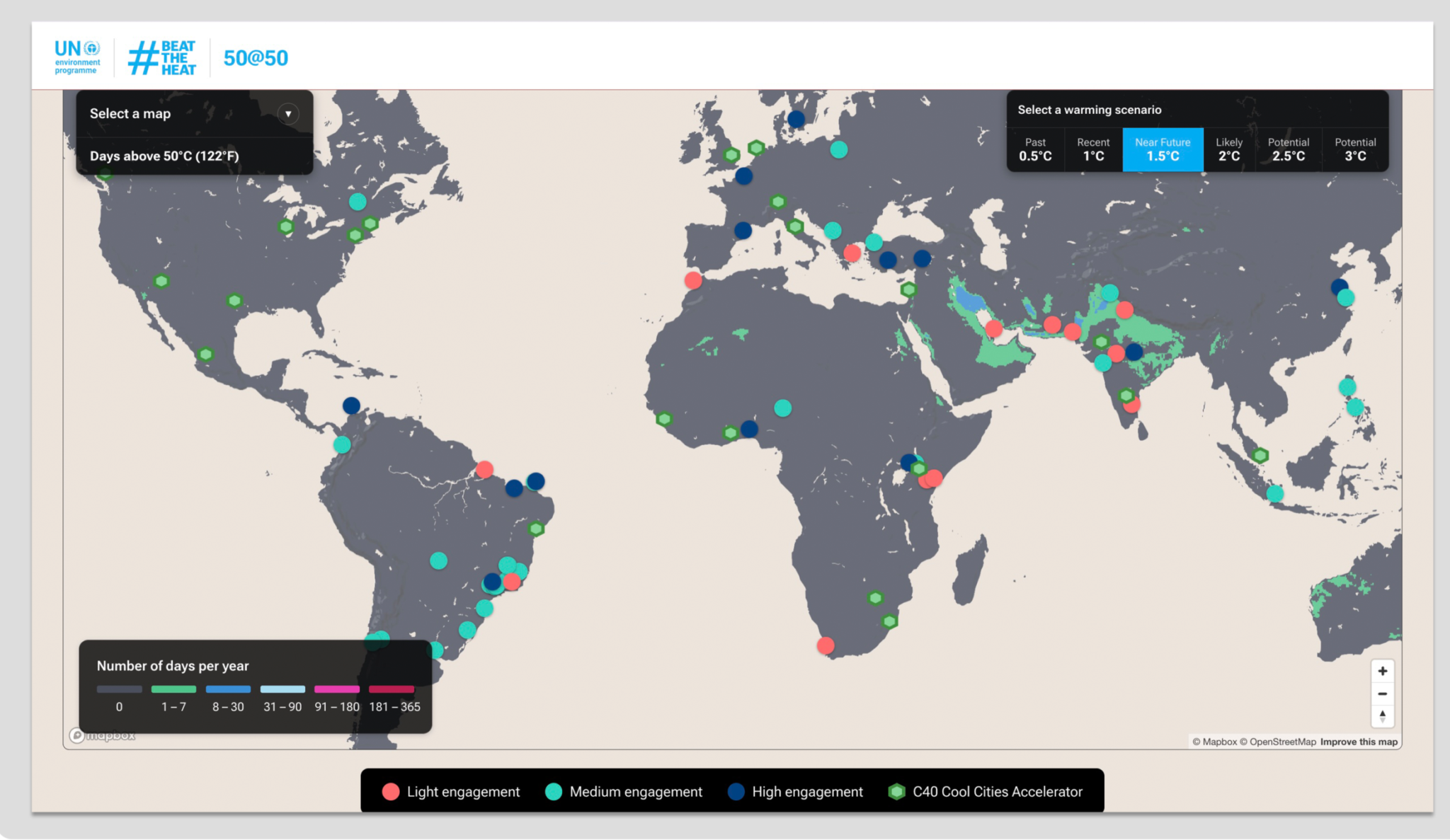
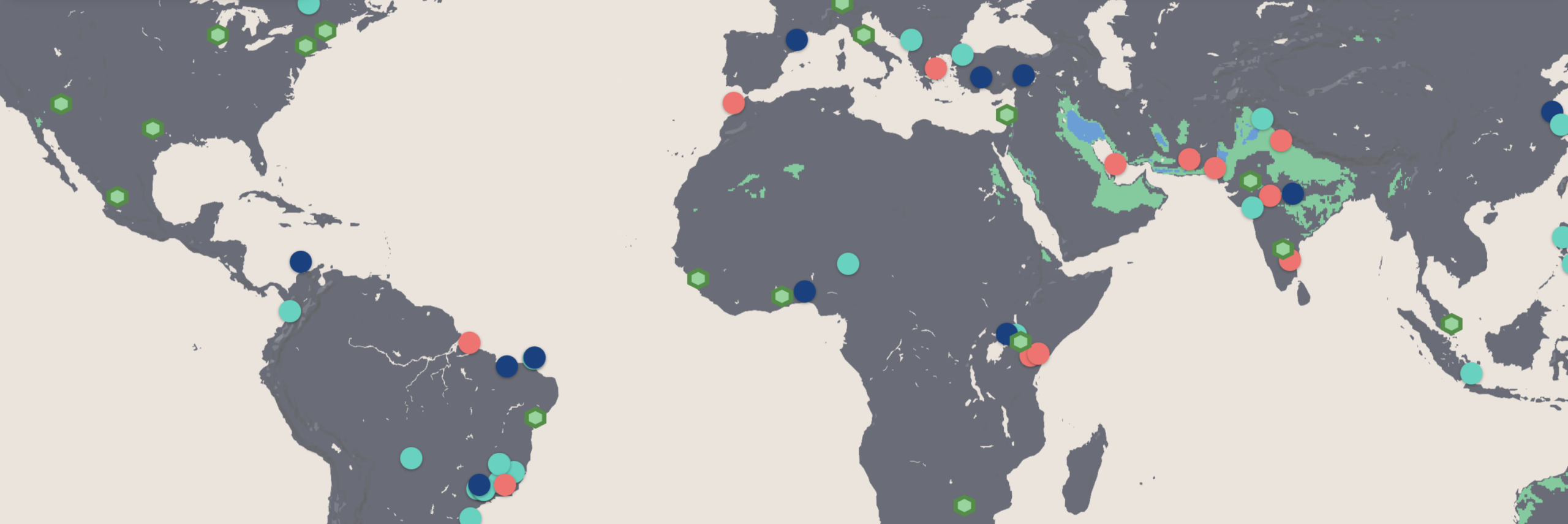
Map of days above 50°C (122°F) on the 50@50 platform.
Visitors can zoom into participating cities, like Lahore, Pakistan, explore projected risks, and discover key adaptive strategies—from cool roofs and urban forests to early warning systems and heat action plans—that are already helping protect people. Rather than presenting climate data in isolation, the platform connects science with human experience by combining climate projections with real-world examples.
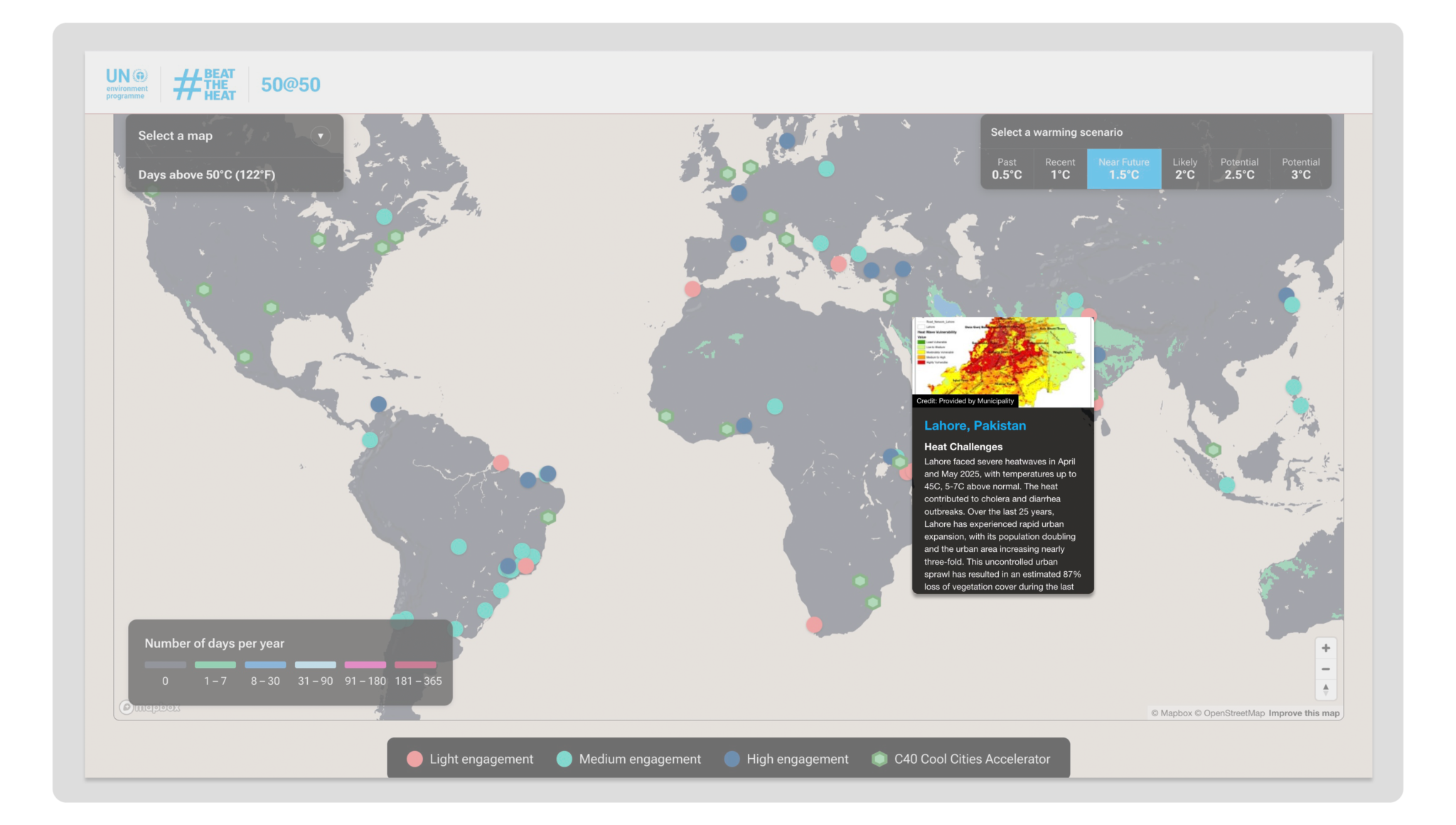
A popup story of extreme heat impacts and examples of climate adaptation in Lahore, Pakistan on the 50@50 site.
As the collaboration evolved, another challenge arose. Temperature alone does not determine how dangerous heat becomes. For millions of people, the combination of heat and humidity poses the greatest threat, making it harder for the human body to cool itself and dramatically increasing health risks.
That insight led the teams to expand the platform, incorporating wet-bulb temperature maps and visual explanations showing why humidity can turn already hot days into life-threatening conditions.
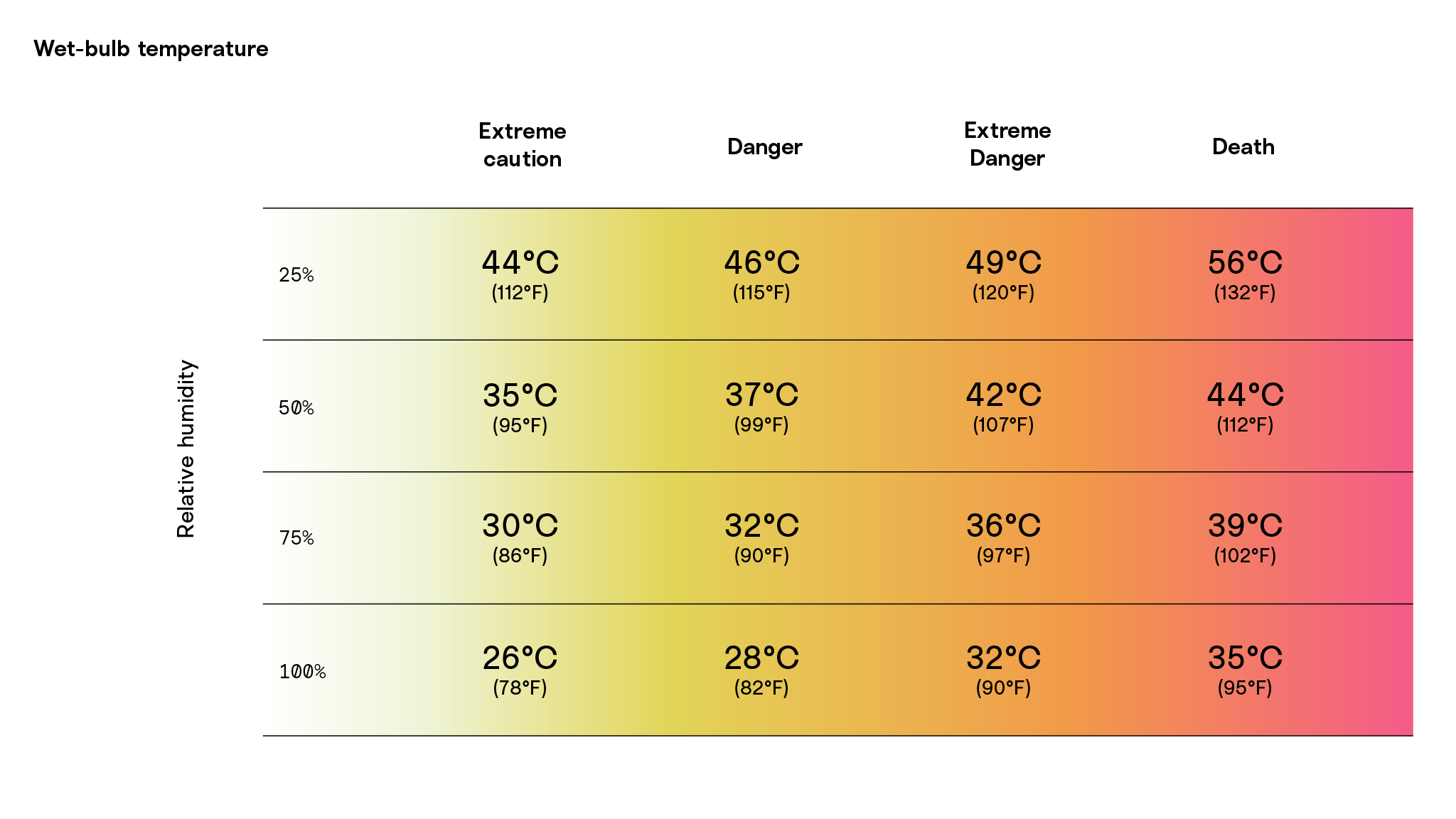
This infographic shows how conditions of humidity and temperature can combine to create dangerous physiological conditions for humans.
Conveying a powerful message
The collaboration helped transform technical climate projections into a communication tool that resonated with journalists, policymakers, and city leaders. The 50@50 interactive webpage drew thousands of readers within days, and press and journalists around the world began accessing the World Environment Day press release, Trello board sharing campaign and social media assets, as well as core messages, Media Valet with easy access to heat-related digital assets, and an introductory trailer video to support their coverage.
Within two weeks of launch, the 50@50 activation went global, with 151 articles published by more than 100 media outlets in 46 countries and 20 languages.
Most importantly, this project demonstrated a resonant way of communicating climate risk, one that combines science with stories, helping people understand not only what likely outcomes the future may hold, but what can still be done to manage those outcomes.
By late June of 2026, the campaign’s interactive platform had attracted more than 41,000 unique visitors and over 91,000 page views, introducing audiences worldwide to practical examples of urban heat resilience.