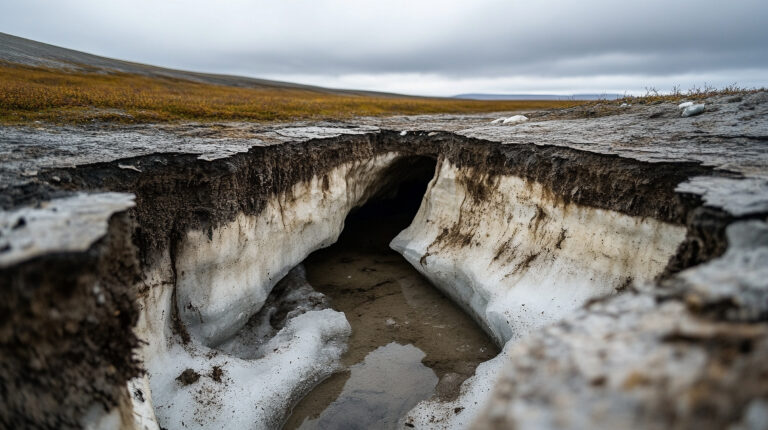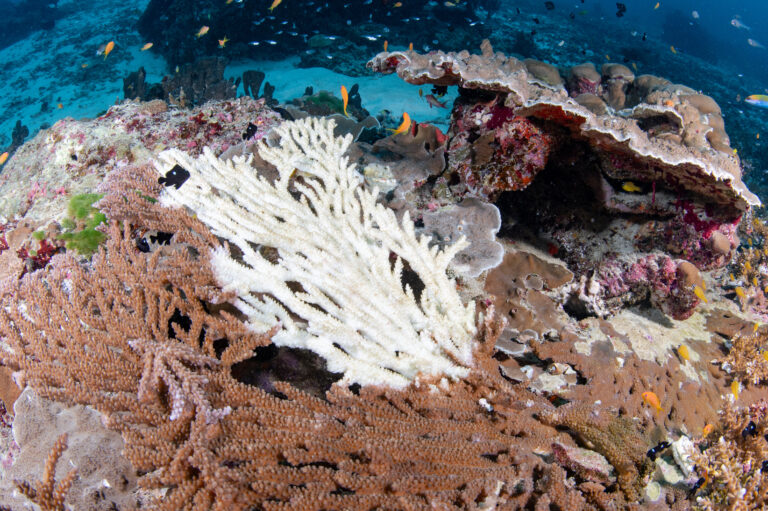
As global temperatures rise due to greenhouse gas emissions, ecosystems and aspects of Earth’s climate are changing around the globe. As these systems change, some risk passing thresholds called tipping points. After an Earth system passes a tipping point, it may begin to reinforce its own change, pushing itself into a new state, like a forest becoming savanna or an ice sheet becoming seawater.
Crossing major tipping points could prompt far-reaching, potentially irreversible changes that reshape the global climate and planet itself. At 1.5°C of global warming, some thresholds are closer than ever before, bringing us closer to a climate scenario in which humans have less control over climate change. Whether we cross key tipping points, how much time we have to avoid crossing them, and what happens to our planet if we do depends on various factors.
What are climate tipping points?
A climate tipping point is a threshold in an Earth system, past which the system starts to perpetuate its own change into a new state, whether rapidly or gradually. They are powerful and concerning thresholds because once a system crosses a tipping point, its change can become self-perpetuating even if we slow or stop greenhouse gas emissions from human activity. The changes that occur after a system crosses a tipping point may be irreversible on human timescales.
Any Earth system or component that can generate its own change can cross a tipping point, from an ice sheet to a system as complex as the Atlantic Meridional Overturning Circulation (AMOC). The tipping point may be the loss of a critical amount of ice mass on the Greenland Ice Sheet, or the AMOC slowing below a particular speed.
The more a system changes due to global warming, the closer it gets to crossing its tipping point. The warmer the atmosphere becomes, the more tipping points are likely to be crossed. For some systems, it can be impossible to anticipate or observe precisely when a tipping point is crossed. Once a tipping point is crossed, subsequent change can be rapid or gradual, and potentially irreversible, even if we stop our own greenhouse emissions.
Climate tipping points versus feedback loops
Climate tipping points and climate feedback loops are related but different. Positive climate feedback loops are mechanisms in Earth’s climate that amplify their own effects, adding to global warming.
A system that has a positive climate feedback loop is similar to a system that has crossed a tipping point because both are perpetuating their own change. However, a system that has crossed a tipping point will continue that change until it enters a new state entirely, potentially disappearing. Not all systems that have feedback loops will cross tipping points; some could potentially stabilize if warming stops.
Warming-induced climate feedback loops and tipping points are both important signals of how the climate is changing because they represent systems that are changing and could continue to change, even if we stop our own greenhouse gas emissions.
Impactful climate tipping points
Crossing certain climate tipping points could have especially profound effects on the climate and planet.
The AMOC
As global average temperatures increase, the melting of Arctic sea ice, including the Greenland Ice Sheet, and increased precipitation over oceans are diluting and weakening the pull of the AMOC, an ocean current that regulates global temperature and precipitation.
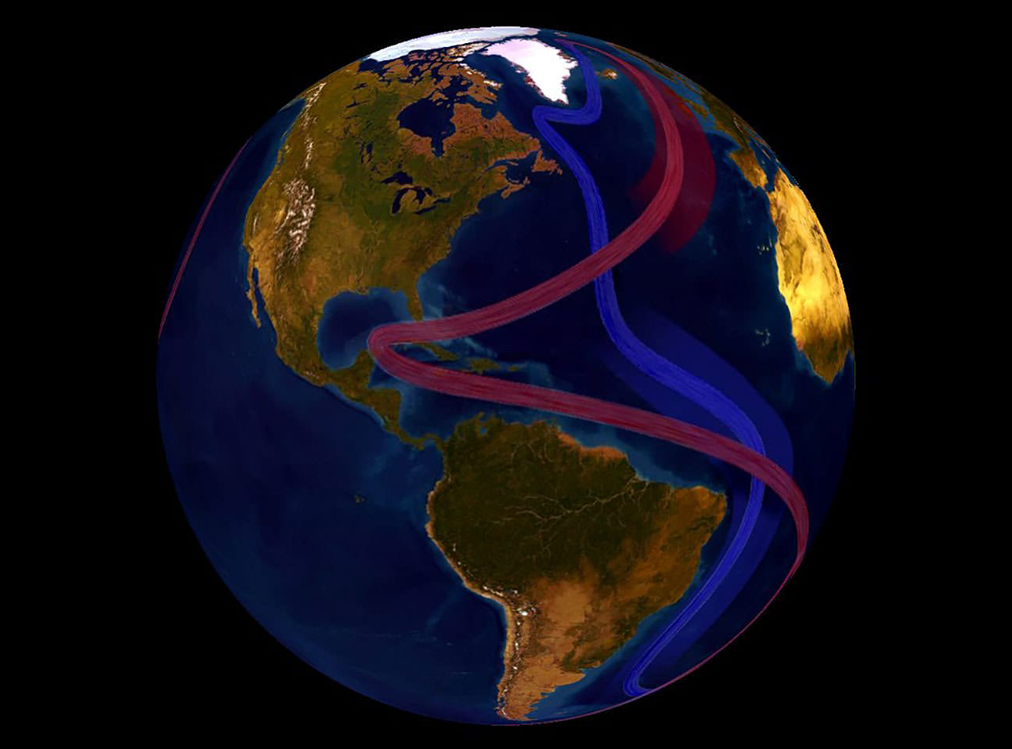
Past a tipping point, the AMOC could stop moving altogether. There is no consensus on when exactly crossing this tipping point would occur, but some of the likely preceding events, like the formation of the “Cold Blob” South of Greenland, have begun. A 2026 paper in Science Advances found that, under a certain warming trajectory, the AMOC could slow by half by 2100.
If the AMOC collapses, parts of the Northern Hemisphere would become much colder, parts of the Southern Hemisphere would become much warmer, and weather around the world would rapidly change. It’s also possible that AMOC collapse would contribute to substantial carbon release from the ocean, adding around 0.2°C of additional global warming. Prior to collapse, substantial weakening of the AMOC could also have profound effects on temperatures and weather in regions around the world.
The Greenland and West Antarctic Ice Sheets
The Greenland and West Antarctic Ice Sheets currently help to cool the planet by reflecting sunlight and heat back into space, but rising temperatures are melting both ice sheets.
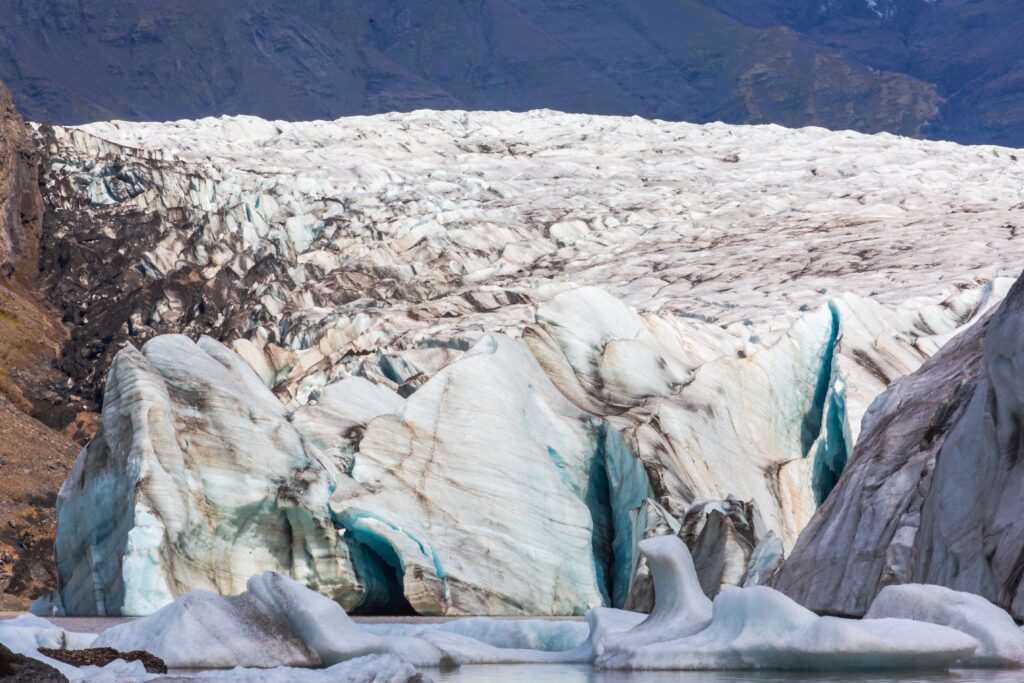
If either of these ice sheets lost a critical amount of mass, that would constitute crossing a tipping point, past which that ice loss would cause further ice loss and the ice sheet would continue to shrink until eventually it disappears.
A May 2022 report by Climate Analytics concluded that the risk of crossing the Greenland Ice Sheet tipping point increases rapidly above 1.5°C of warming (global average temperatures exceeded 1.5°C of warming in 2023 and 2024). Once this tipping point is crossed, it may take centuries to millennia for the Greenland Ice Sheet to entirely disappear.
November 2018 research in Nature modeled the tipping point for the West Antarctic Ice Sheet at somewhere between 1.5°C and 2°C of warming. May 2025 research in Nature found that deep ocean warming of just 0.25°C above current levels, which could occur within decades, could push the Antarctic ice sheet across a tipping point into irreversible collapse over the course of millennia.
The complete or partial loss of the Greenland Ice Sheet would raise sea levels and change ocean temperatures, disrupting crucial ocean currents (including the AMOC) that help to regulate global weather conditions. The loss of the West Antarctic Ice Sheet would also prompt sea level rise, ocean temperature change, and ocean current disruption, and both these losses would combine to greatly decrease Earth’s reflectivity, called albedo, further warming the climate. While it might take centuries to millennia for these ice sheets to entirely disappear, even marginal or accelerating loss of ice will cause disruptions on a smaller scale, including to sea levels, ocean temperatures, currents, and reflectivity, prompting cascading changes in climate systems.
Amazon rainforest
Rising global temperatures are increasing the occurrence of wildfire and drought in the Amazon rainforest, weakening an ecosystem that plays a key role in regulating global temperatures.
If these climate stresses, combined with deforestation and human activity, prompt the Amazon rainforest to cross a tipping point, past which the rainforest continues to degrade, the Amazon could change from absorbing greenhouse gases to emitting greenhouse gases. A February 2024 paper published in Nature stated that up to 47% of the Amazon rainforest could reach this tipping point by 2050 based on current warming trends. 2022 research in Science estimated that, once enough of the Amazon crosses a tipping point, the rainforest itself could transition into a new state in 50-200 years.
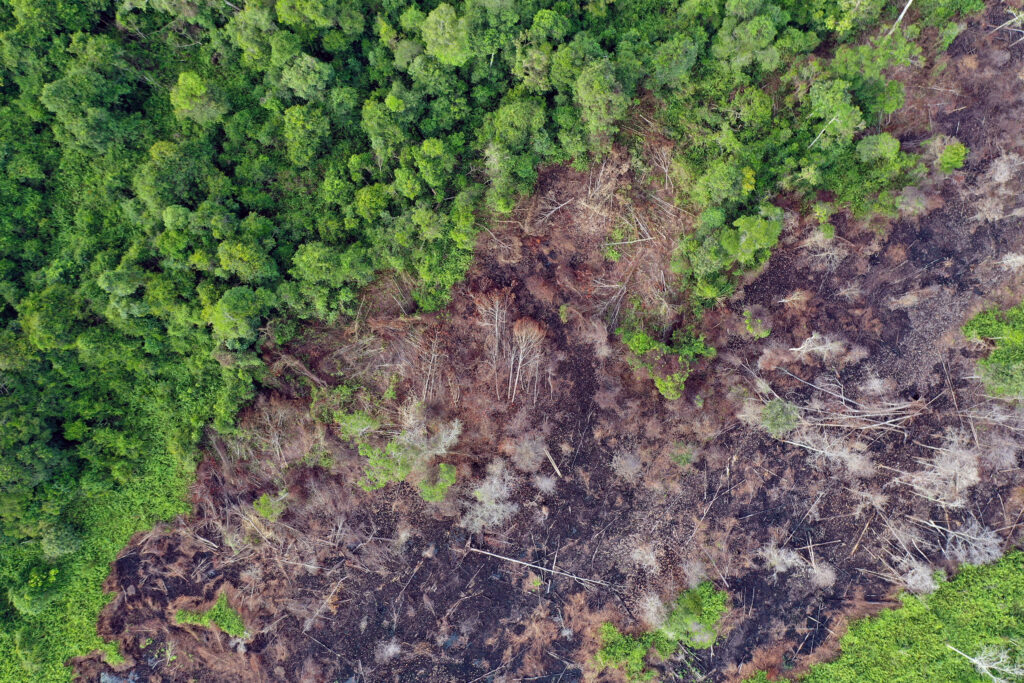
The loss of the Amazon rainforest would have severe ecological effects and alter the global climate. In addition, its transition to an overall source of greenhouse gas emissions, which a 2021 paper in Nature found may already be underway, would continue to raise global temperatures even if human emissions stopped completely.
Permafrost
Permafrost is frozen ground in cold regions, such as the Arctic. Most permafrost has been frozen since the last ice age, around 12 thousand years ago, and it stores large amounts of carbon in the form of frozen plants and animals—about twice as much carbon as the atmosphere contains and the equivalent of 100 years’ worth of current global greenhouse gas emissions.
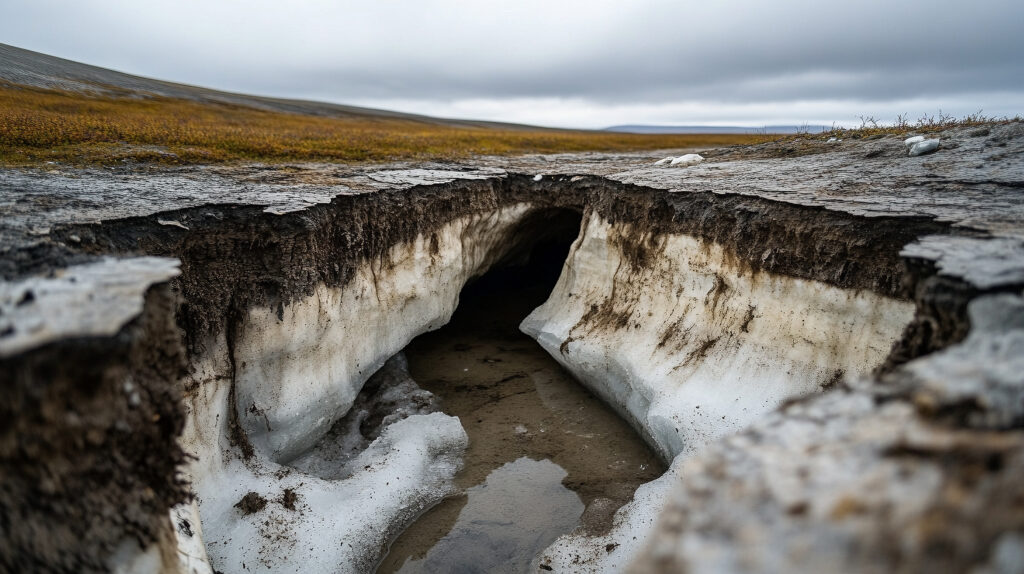
The Arctic is warming three times faster than the rest of the planet, and as permafrost thaws, the frozen plants and animals decompose, releasing greenhouse gases like carbon dioxide and methane that warm the atmosphere, creating a climate feedback loop that prompts more rapid permafrost thaw. Past a tipping point, Northern permafrost could shift from being a net store of emissions to a net source of emissions, somewhere between 2°C and 4°C of warming according to a June 2026 paper published in Science Advances.
Coral reefs
A 2025 report concluded that tropical coral reefs may have already crossed a tipping point, past which almost all will eventually disappear.
Rising ocean temperatures are prompting bleaching events, which can kill warm-water coral. The increased frequency and severity of these events prevent coral reefs from recovering, indicating that without technological intervention, there will be mass coral reef die-off. 2025 research in Nature found that if warming exceeds 2°C, 99% of tropical Atlantic reefs could be eroding by 2100.
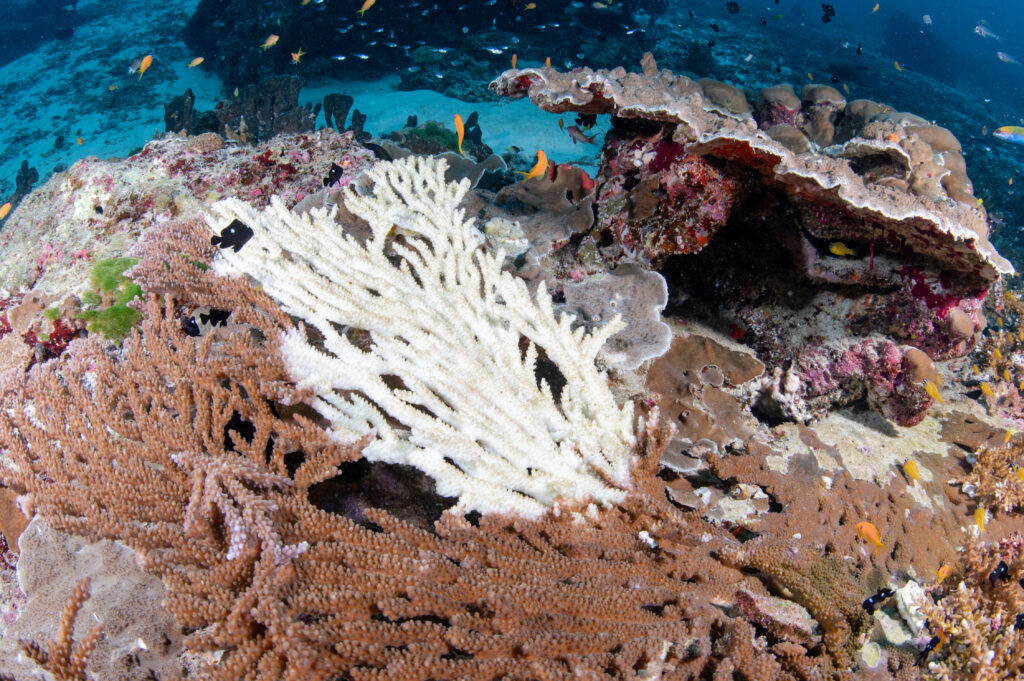
According to the Woods Hole Oceanographic Institution, 25% of known marine life is connected to coral reefs, meaning the loss of reefs would impact biodiversity and the millions of people who rely on those species for food and livelihoods. Losing reefs could also leave coastal land more exposed to increasingly intense and frequent storms.
Can we intervene in climate tipping points?
In some cases, it may be possible to delay or prevent the crossing of a tipping point or slow down the associated changes by curbing greenhouse gas emissions and slowing warming. Slowing warming could slow the changes that propel a system across a tipping point, potentially giving us more time to prepare for, adapt to, or even try to prevent a system’s transition into a new state.
As of 2026, the only way we can slow or stop warming is by slowing and ceasing greenhouse gas emissions. In the future, technology that removes carbon from the atmosphere at scale could theoretically counteract greenhouse gas emissions from human activity and the emissions being added from positive climate feedback loops, stopping or reversing warming and preventing crossing certain tipping points. Other technologies could theoretically stabilize specific climate systems before they cross a tipping point or try to repair them once a change is underway, such as masking the amount of solar energy that can reach a glacier, or using engineering approaches to prevent an ice sheet from melting further.
Given how close we are to several impactful tipping points, the best approaches to potentially prevent major and irreversible disruption to Earth’s systems are to cease emissions as soon as possible, develop technology that could intervene in major climate systems safely, and combine these efforts to try to reverse existing change and slow or stop future change.
Was this article helpful?
Thank you. Your feedback helps us improve.